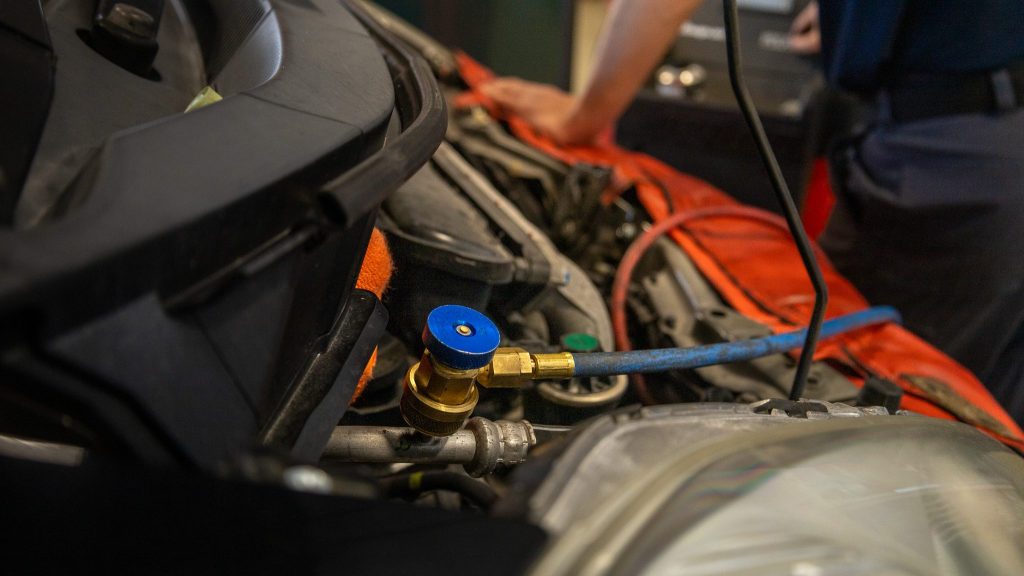
In the Okanagan, May serves as the ultimate litmus test for your vehicle’s thermal management systems. For owners of late-model Audi, BMW, and Porsche vehicles, a malfunctioning Air Conditioning (AC) system is rarely a simple matter of low gas.
While a quick-service shop might offer a generic recharge, this approach often overlooks the complex architecture of European climate control systems. This can lead to catastrophic component failure and unnecessary expense. At Motor Werke, we think of AC performance as a true diagnostic process rather than a quick commodity service.
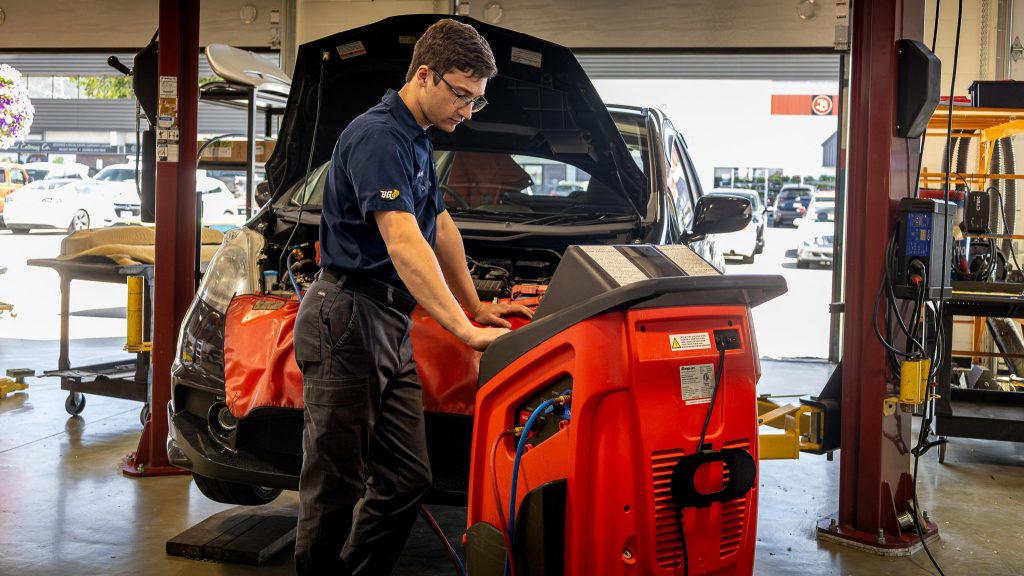
The Closed-Loop Myth: Why Topping Up is a Tactical Error
A healthy European AC system is a hermetically sealed environment. Under normal operating conditions, refrigerant is not a consumable fluid. If your vent temperatures have climbed, the system has suffered a breach in integrity.
Simply topping up refrigerant in a leaking system introduces fresh refrigerant into an environment that may already be contaminated by moisture or non-condensable gases. More importantly, it ignores the root cause of the leak. This ensures that your investment quickly evaporates as the Kelowna summer intensifies.
1. The Variable Displacement Compressor: A Zero-Tolerance Component
Unlike traditional AC systems that cycle on and off, many modern European platforms utilize variable displacement compressors. These units are always on and rely on the refrigerant to circulate the specialized PAG or POE oils that lubricate them. This is particularly common in BMW N55 or B58 and Audi EA839 engines.
A system running low on charge is also a system running low on lubrication. Without adequate oil flow, wear increases and the compressor’s internal swash plate can seize. This leads to what some technicians call “Black Death.” This internal disintegration sends metallic shrapnel through every line, hose, and evaporator in your car, requiring a multi-thousand-dollar overhaul of the entire HVAC loop.
2. R1234yf: The Precision Requirement
Since 2015, European manufacturers have transitioned to R1234yf refrigerant. While it is better for the environment, this gas is chemically sensitive and expensive.
Generic recharge kits from the auto parts store are cheap for a reason. They can lead to cross-contamination or incorrect charge weights. These systems are sensitive to within 10 grams. Even a slight deviation can result in poor cooling performance or high-pressure cut-offs that put unnecessary strain on the engine’s cooling fans.
3. The Front-Line Vulnerability: Condenser Integrity
The aggressive winter sanding on BC highways like the Coquihalla or Highway 97 poses a lesser-known threat to European cars. The AC condenser is positioned at the leading edge of the cooling stack, making it susceptible to sandblasting and debris impact. These leaks are generally not dramatic, and most people will have no idea anything has happened until they try to turn on their AC in the spring and it just doesn’t get cold like it used to.
If there is a breach in the condenser fins or O-ring seals, a simple recharge will fail to hold. Specialized leak detection is required to identify these microscopic fractures before the system is recharged.
4. The Microbial Factor: Evaporator Health
If your vents emit a musty odor upon startup, you are dealing with a biological issue rather than just a thermal one. The tight packaging of European evaporators can trap condensation, which leads to mold growth. Maintenance of the cabin filtration system and evaporator drains is essential to prevent musty smells, and in extreme cases, water ingress into the sensitive electronics located in the vehicle footwell.
Protect Your Investment
Don’t wait for a 35°C Okanagan heatwave to discover your AC system is compromised. Come see us at Motor Werke and we can paint a full picture of what is going on in your climate control system. A professional inspection today prevents a headache tomorrow.