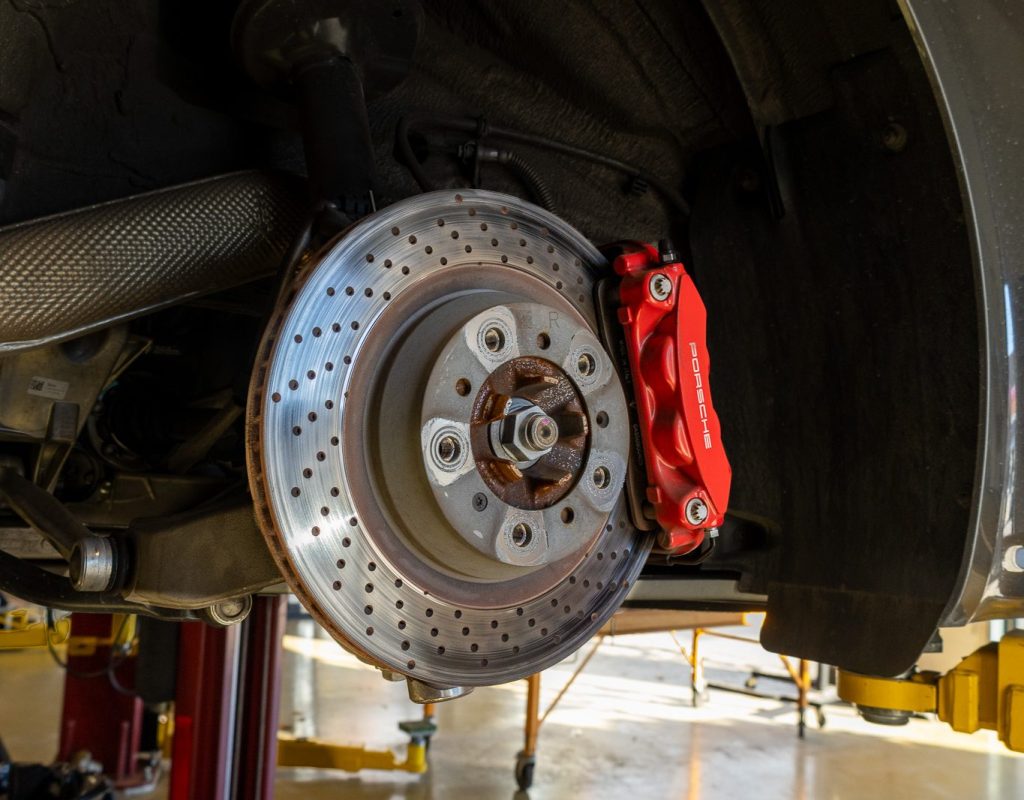
Your brakes are designed to communicate with you long before they completely fail. On modern European vehicles, high-performance braking systems use tight tolerances, specialized pad compounds, and wear sensors to warn you early. Knowing how to interpret these signs can save you from costly rotor replacements or safety hazards on the road.
1. The High-Pitched Squeak.
- The Cause: A high-frequency squeal under light braking often points to glazed brake pads or excessive brake dust accumulation in the calliper carrier. Glazing occurs when pads overheat from heavy braking or drag heavily against rotors, creating a smooth, hard surface on the friction material.
- The Fix: If the pads still have friction material remaining, a technician can clean the brake hardware, de-glaze the pad surfaces, or replace wear sensors. If squealing pads are worn down to their built-in acoustic indicators, it’s time for a pad replacement.
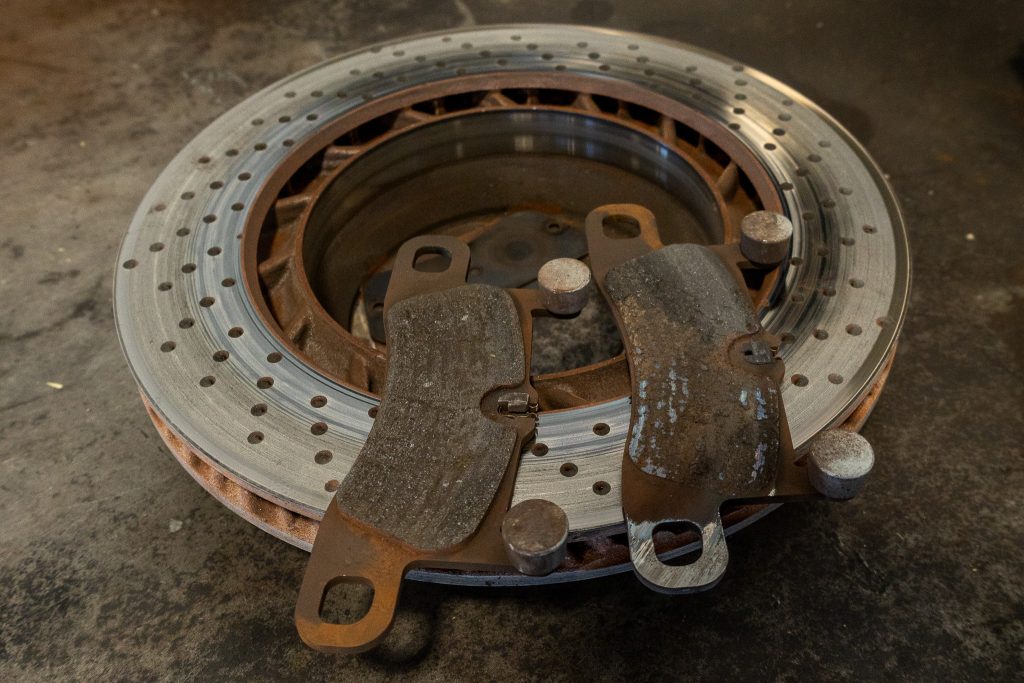
2. The Harsh Metal-on-Metal Grind.
- The Cause: A deep, mechanical scraping sound means your friction pads are completely worn away. The metal backing plate of the brake pad is now physically grinding against the steel brake rotor disc.
- The Fix: Immediate action is required. Driving in this condition severely degrades stopping distance and permanently scores the brake rotor, requiring a full pad and rotor replacement.
3. The Pulsing Brake Pedal.
- The Cause: Feeling rhythmic vibration through your foot when braking is rarely due to a “warped” rotor in the traditional sense. It is almost always caused by Disc Thickness Variation (DTV), which refers to microscopic thick and thin spots across the disc that displace hydraulic fluid and push the calliper, where friction material bakes onto one area of the disc after coming to a hard stop with hot brakes clamped down. Lateral runout (hub corrosion, bearing play, or uneven lug torque) can also accelerate this by causing the pads to continuously scrub the high spots of the wobbling rotor until the thickness becomes uneven.
- The Fix: The standard, modern solution is to replace the brake rotors with a fresh set of brake pads as a matched pair. Installing new components is the only reliable way to eliminate thickness variations, ensure proper friction-layer bed-in, and fully restore factory pedal feel without risking recurrence.