
Modern turbocharged European engines leave significant horsepower and torque on the table from the factory. Manufacturers detune engines to account for varying global fuel qualities, extreme climate conditions, and poor maintenance habits. A Stage 1 ECU Tune unlocks this latent performance purely through software calibration, requiring no mechanical hardware modifications.
How Stage 1 Software Works
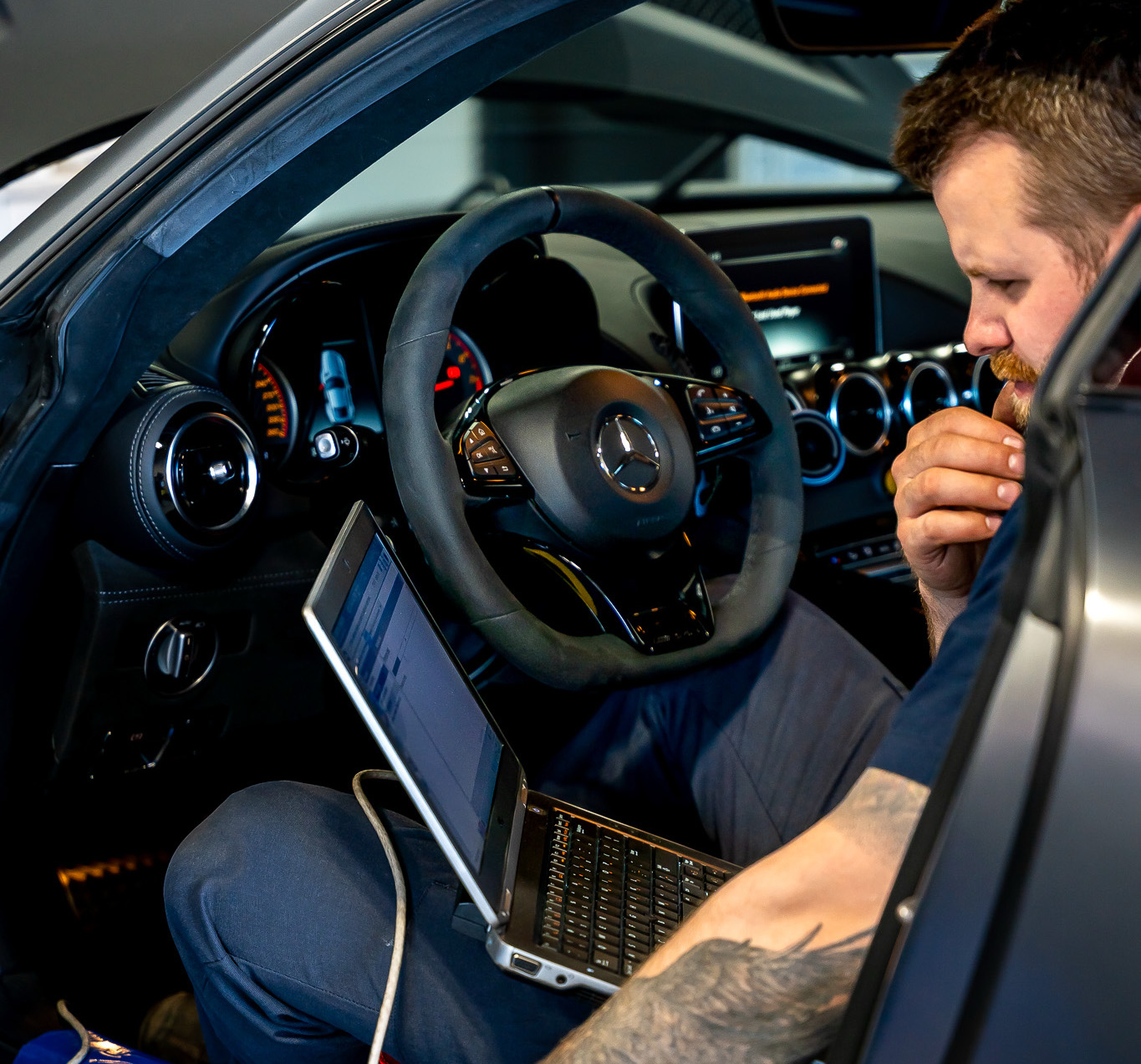
During a Stage 1 reflash, a technician reprogrammes the Engine Control Unit (ECU) parameters, optimizing:
- Boost Pressure: Safely raising turbocharger output within its efficient operating range.
- Ignition Timing & Fuel Mapping: Fine-tuning spark delivery and air-fuel ratios to extract maximum energy from premium fuel.
- Throttle Response: Eliminating factory drive-by-wire lag for immediate pedal input.
Balancing Power with Reliability
Tune manufacturer’s design Stage 1 calibrations to preserve factory engine safety limits. Critical knock-detection sensors, oil temperature threshold safeguards, and exhaust-gas temperature limits remain fully active. When flashed by a reputable specialist, a Stage 1 tune provides smooth, daily-drivable power increases without sacrificing reliability.
Supporting Maintenance Requirements
To keep a tuned European engine running reliably, preventative maintenance intervals must be adjusted:
- Spark Plugs & Ignition Coils: Higher boost pressures place a greater demand on ignition systems. Spark plugs should be replaced at tighter intervals (e.g., every 50,000 km)
- Strict Oil Change Intervals: Heat loads increase with output; high-spec European synthetic oil flushes should be done on time every 5,000 to 8,000 km.
- Top-Tier Fuel: Stage 1 tunes require premium high-octane fuel (91 or 93 Octane) to prevent knock and maintain engine safety parameters. Shell 91 or Chevron 94 are the preferred local fuels for performance cars.