
If you own a European vehicle, your cooling system often relies heavily on specialized glass-reinforced composite plastics for thermostat housings, coolant expansion tanks, water pump housings, and quick-connect hose fittings. While lightweight and cost-effective to manufacture, these components face severe thermal strain over time.
Why Plastic Fails Under the Hood
Modern European engines operate at high baseline temperatures, often between 95°C and 108°C, to maximize fuel efficiency and reduce emissions. Every time you drive, these plastic components heat up, expand, cool down and contract.
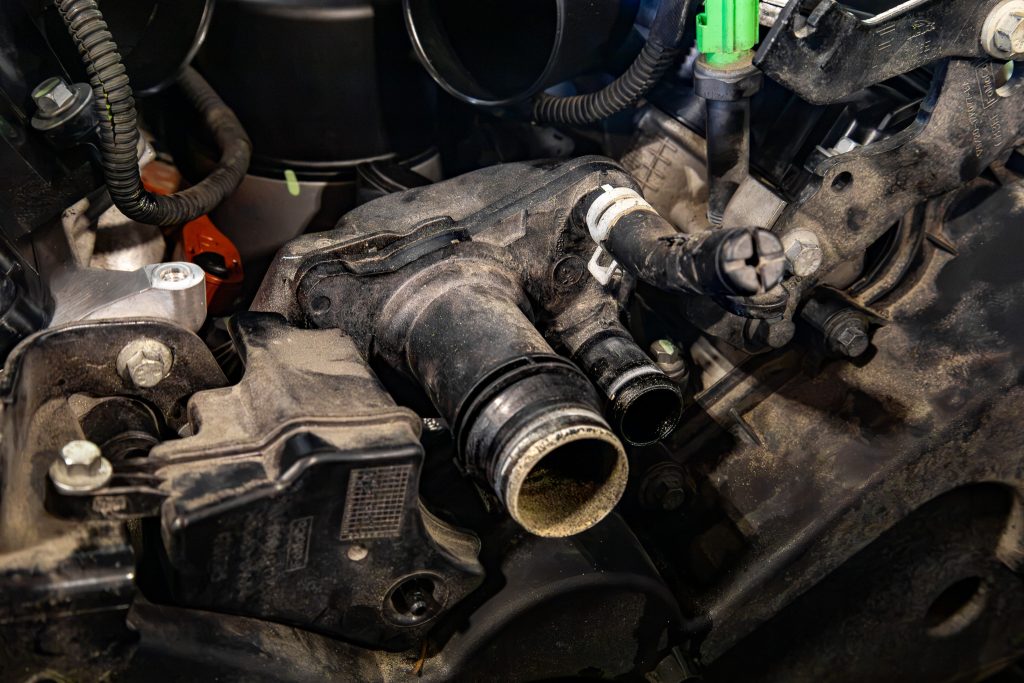
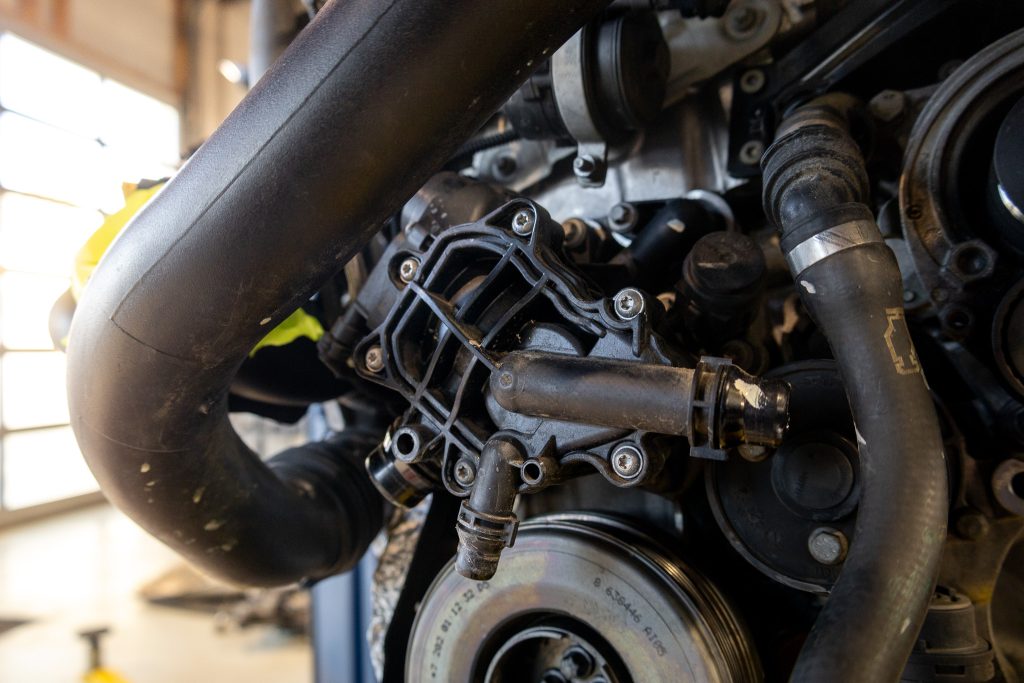
The Most Common Hotspots
- Coolant Expansion Tanks: Constant pressure fluctuations cause hairline fractures along the factory moulding seams, leading to slow, hard-to-detect leaks.
- Thermostat Housings & Water Crossovers: Positioned directly against the hot engine block, these plastic housings often warp or crack at the mounting flanges.
- Quick-Connect Hose Fittings: The plastic collars on radiator and heat core hoses become brittle and can easily snap when disturbed during routing maintenance.
Early Warning Signs to Watch for
- Residue Marks: White, pink, or blue chalky powder dried around plastic seams or hose connections.
- Sweet Exhaust or Cabin Smells: A distinct maple-syrup-like aroma after parking, indicating coolant escaping onto warm engine components.
- Low Coolant Warnings: Small drops in the reservoir without obvious puddles on your driveway, often caused by coolant boiling off micro-cracks before hitting the ground.