
There’s a common myth floating around the automotive world that manual transmission fluid lasts forever. Some manufacturers even call it a “lifetime fill”. But let’s be real: no lubricant can handle years of heat, friction, and metal-on-metal wear without breaking down.
If you love the mechanical connection of driving a manual, skipping the maintenance is costing you. Here is why changing fluid matters, and the tangible upgrades you’ll feel the moment you drop the clutch.
What's Happening Inside Your Gearbox?
Unlike automotive transmissions that use fluid primarily to create hydraulic pressure, your manual gearbox uses fluid for pure survival. It has two main jobs:
- Lubrication: Keeping gears, bearings, and shafts spinning smoothly.
- Friction Management: Helping the synchronizers (synchros) match gear speeds for seamless shift.
Over time, the fluid shears down under intense pressure and loses its viscosity. Even worse, as you shift, tiny microscopic metal shavings naturally break off the gears. Without a filter (which most manuals don’t have), your fluid becomes more gritty and abrasive.
The Tangible Rewards of Fresh Fluid
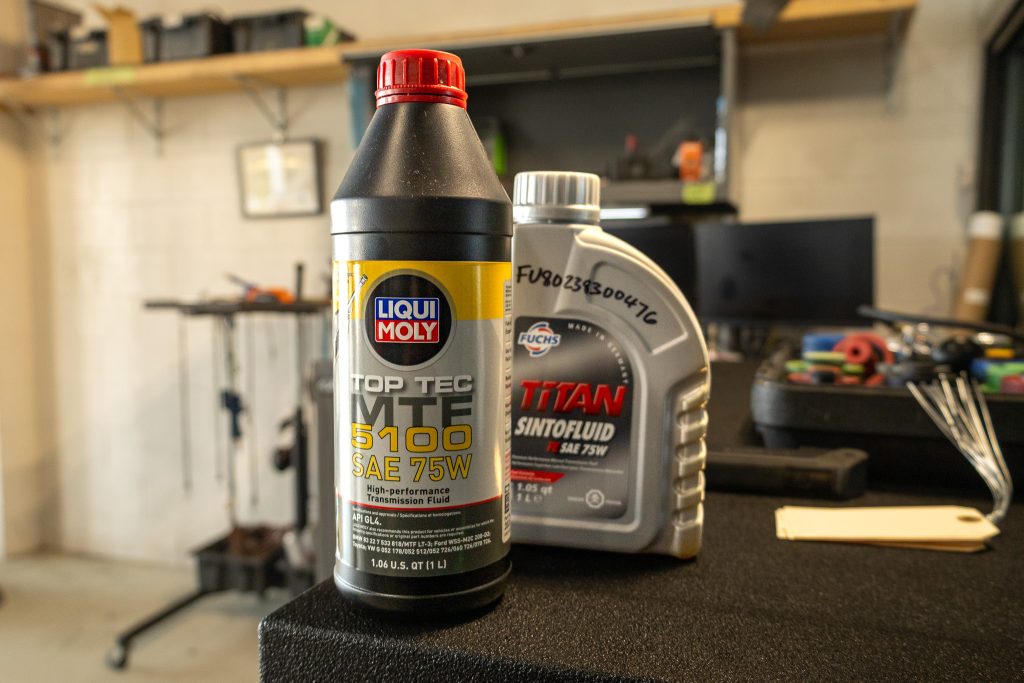
When you drain the old sludge and pour in fresh, high-quality manual transmission fluid, you aren’t just protecting your wallet from a costly rebuild – you’re actively upgrading your daily drive.
- The “Hot Knife Through Butter” Shifting: If you’ve been fighting your shifter, especially when the car is cold, old fluid is usually the culprit. Fresh fluid allows the synchros to engage quickly and smoothly. You’ll instantly notice shorter, crisper, and effortless throws.
- Silence the Whine: Are you hearing a faint mechanical bhum or whine when accelerating? Wear particles in old fluid cause friction in the bearings. Clean fluid restores the quiet, refined sound of a healthy drivetrain.
- Eliminate Gear Crunch: That cringeworthy crunch when shifting into second or third gear is often the result of worn-out friction modifiers. Fresh fluid gives the synchros the exact grip they need to match speeds, eliminating the grind.
- Better Cold Weather Performance: Old, moisture-contaminated fluid turns thick and stubborn in winter temperatures. New fluid maintains its flow, giving you smooth shifts right out of the driveway.
The Bottom Line
Changing manual transmission fluid is one of the most overlooked, inexpensive maintenance tasks you can perform, usually recommended every 80,000 to 100,000 km.
If your car has crossed that threshold, do yourself a favour and swap it out. Your gearbox will last longer, and you’ll get back a rewarding driving experience that made you choose a manual in the first place.