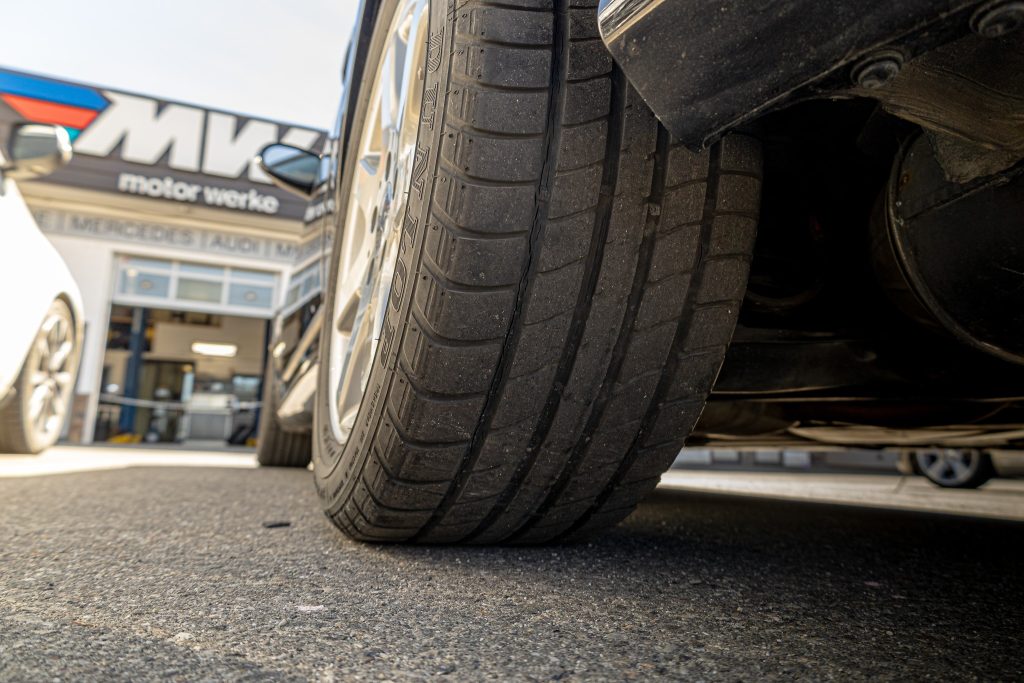
For many European and Import vehicle owners in the Okanagan, a car is more than just a daily commuter. It might be a weekend treasure, a seasonal convertible, or a secondary SUV that only sees the road for specific trips.

Because these vehicles are not driven often, the tire tread often looks brand new, even after several years. However, there is a hidden clock inside every tire that has nothing to do with how many kilometers are on the odometer.
The Science of Rubber Aging
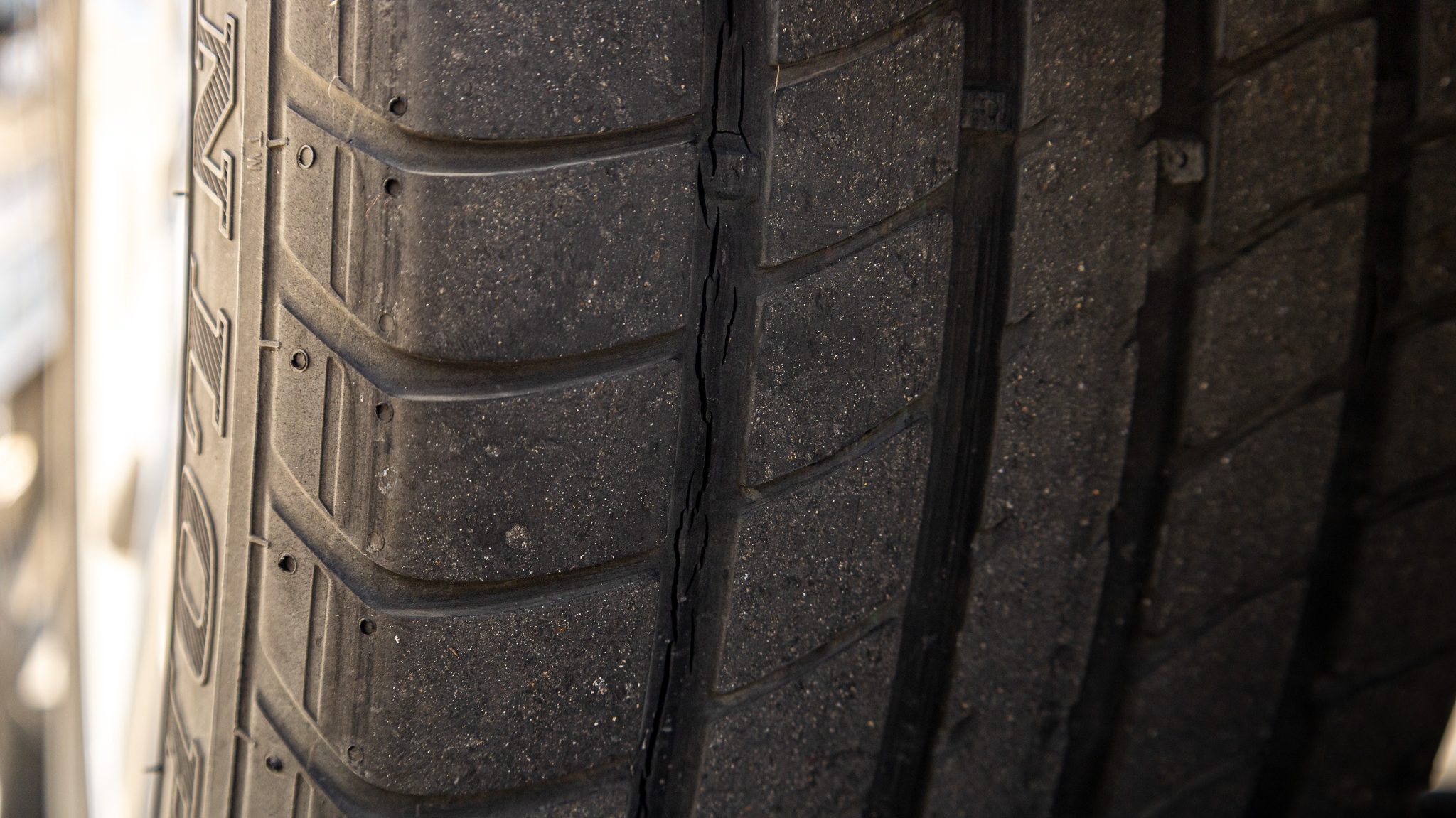
Tires are complex chemical compounds. Over time, the oils and resins that keep the rubber supple and “grippy” begin to evaporate. This process is called oxidation. When a tire is driven regularly, the internal oils are distributed through the rubber by the heat and motion of driving. When a car sits, these oils settle, and the rubber begins to harden and become brittle.
In our British Columbia climate, this process can be accelerated by temperature swings and UV exposure. Eventually, the tire develops “dry rot”—tiny cracks in the sidewall or between the tread blocks.
Visual Deception
The danger lies in the relative reassurance of a quick visual inspection. If you just take a quick glance at the tire’s tread wear, it may look like it has plenty of life left. The reality is, a tire can have 80% of its tread remaining but still be structurally compromised. An aging tire hardens and becomes stiff as it dries out and loses its ability to flex, which means it cannot grip the road effectively during a sudden stop or a sharp turn. In extreme cases, the internal structure can delaminate, leading to a blowout even at moderate speeds.
How to Check Your Tire’s Age
Every tire has a “birth date” stamped on the sidewall. The DOT code is a series of letters and numbers. The last four digits are the important part here. These numbers tell you the week and year the tire was manufactured. For example, “4801” means the tire was made in the 48th week of 2001. As a professional rule of thumb, tires should be inspected thoroughly once they reach five years of age, regardless of remaining tread depth. Most manufacturers recommend replacement after six to ten years, as the rubber compounds are no longer reliable for high-performance or emergency maneuvers.
Our Professional Recommendation
At Motor Werke, we believe in providing transparency and safety for our customers. During every service, our technicians do not just check your tread depth; we verify the age and structural integrity of your tires.
If your vehicle has been sitting over the winter or only comes out for occasional Sunday drives, let us provide a quick assessment. It’s the best way to ensure that when you do decide to take that drive, you can do so with total confidence.
Every car. Every time.